Think about an ordinary day
Where do the cars sit? Can you open both doors, get the bins out and reach the entrance without walking behind a reversing vehicle? A useful layout comes before the colour chart.
Include any vans, trailers or heavier vehicles in the discussion. The driveway construction should reflect the loads it will actually carry.
- Parking and turning space
- The route from the pavement to your door
- Slopes and changes in level
- Where water collects after rain
Match the finish to the frontage
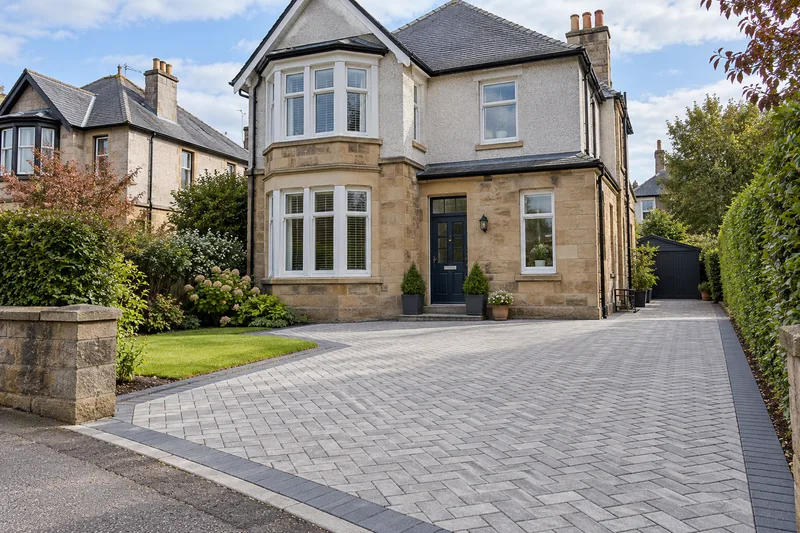
Monoblock brings pattern and defined edges. Resin bound offers a continuous aggregate finish. Tarmac keeps the view simple and pairs well with a contrasting border.
Gravel suits a more informal setting, while granite setts add texture around stone buildings. Imprinted concrete provides a decorative surface but brings its own jointing and maintenance considerations.
Compare samples beside the house and look at them wet and dry. A large area can appear more prominent than a small sample, so keep the border and main colour in balance.
Be honest about the upkeep
Gravel may need redistributing. Monoblock joints need attention. Leaves and debris need clearing from every surface, particularly around drainage. Ask what routine care the chosen specification requires.
Think about future access to services beneath the drive. Individual blocks can sometimes be lifted and reinstated more discreetly than a patch in a continuous surface.
Compare the complete proposal
The visible surface is only part of a driveway. Compare the groundwork, drainage, edges and waste removal as well as the finish. Clarify access arrangements and the point at which parking can resume.
If the existing drive is fundamentally sound, ask whether a targeted repair or refresh could meet your needs. If it moves or holds water, address the cause before choosing a new top layer.