Contain the stone
Plan strong edges and a practical transition at the road or footpath. Keeping aggregate within the driveway is part of the design.
A relaxed, natural finish with plenty of character. The right stone, a stable base and careful containment make the difference between tidy gravel and constant movement.
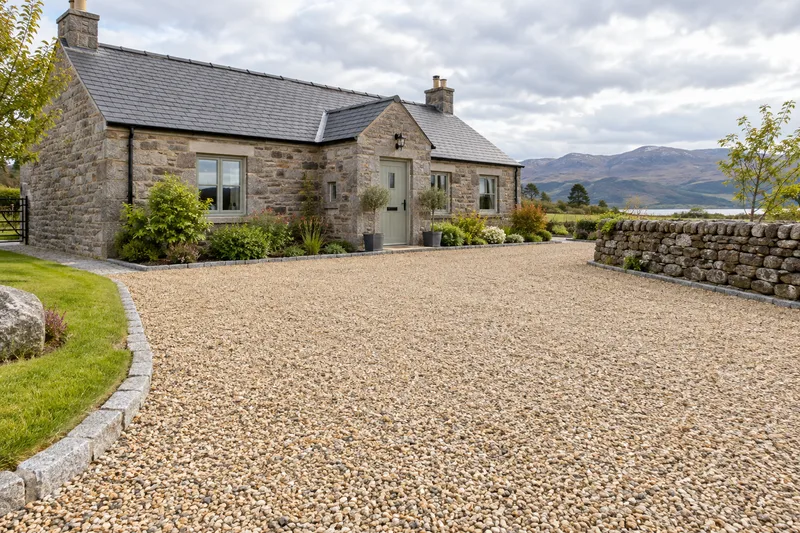
Gravel works particularly well with stone cottages, gardens and broader entrance spaces. Colour, size and shape change how the driveway looks and feels. Shingle is sometimes used as a general description, but a sample is more useful than a name when deciding what suits the site.
Loose stone moves under tyres and needs periodic raking and topping up. Slopes, wheelchair access and the meeting point with a public pavement require particular care.
Plan strong edges and a practical transition at the road or footpath. Keeping aggregate within the driveway is part of the design.
A suitable grid may improve stability, but it must be selected for the expected vehicles and installed over an appropriate base.
Loose gravel does not, by itself, prove that the complete driveway drains adequately. Ground conditions and the underlying layers remain important.
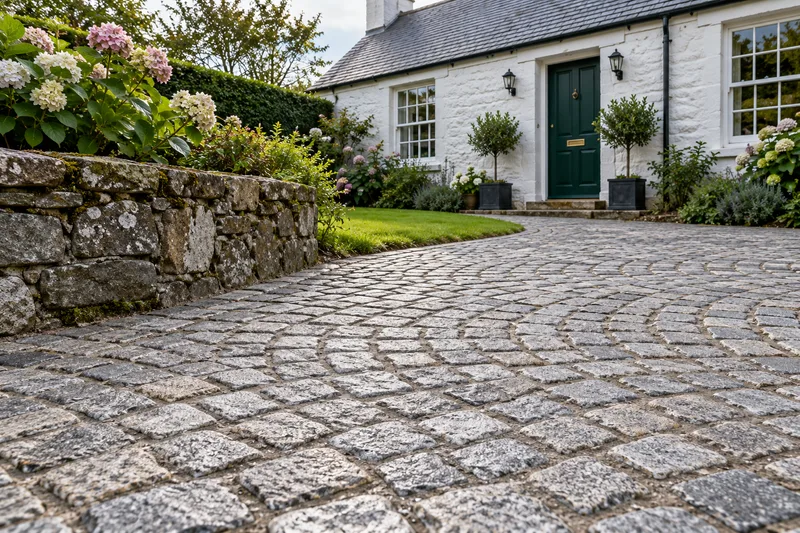
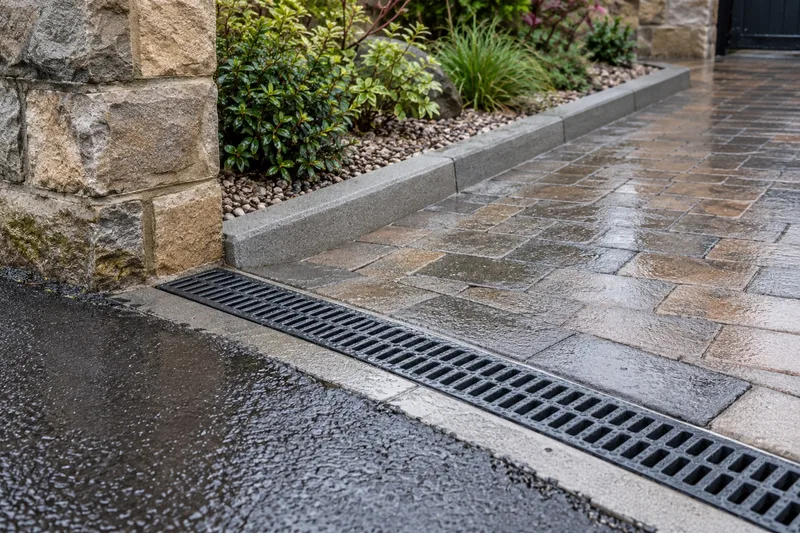
If a gravel parking area could reduce your reliance on the street, assess the entrance, slope and usable space first. Include a detail that keeps loose stone within the driveway.
Give the same project details when comparing options. A surface price alone rarely tells the whole story.
Understand the cost factorsNo. Loose gravel is unbound stone; tar and chip uses chippings in a surface-dressing system. Their construction, wear and maintenance differ.
Farm access needs a specification for actual vehicles, ground conditions and turning loads. Share these details before assuming a domestic design will be suitable.
Debris can collect and support weeds on many surfaces, including gravel. Regular clearing helps; a membrane is not a promise of a weed-free drive.
Tell us what you have in mind, where you are and how you use the space.