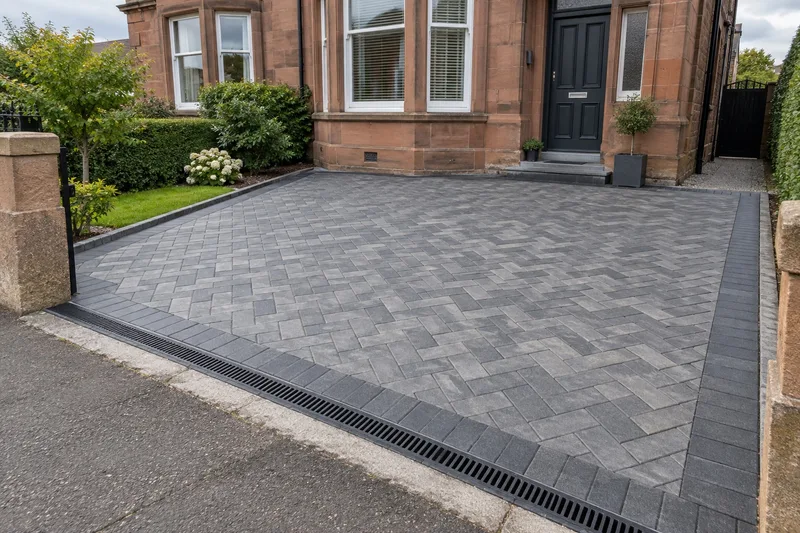
Identify what needs attention
Loose debris, weeds, algae and oil marks are different problems. Take a close look at whether the surface itself is sound before choosing a treatment.
If blocks are loose or an area is sinking, a clean will not solve the construction issue. If the surface has a sealer or coating, identify it before applying another product.
Reduce places for weeds to establish
Sweeping away soil and organic debris helps limit the material in which seeds can grow. On paved drives, check the condition of the joints as well as the visible weeds.
Do not assume that a membrane or sealer makes a driveway permanently weed-free. Use any treatment only as directed for the surface and situation, with appropriate consideration for runoff and nearby planting.
Set realistic expectations for oil marks
A recent spill and an old absorbed stain may respond differently. Follow the paving or surface manufacturer’s guidance, and test a compatible cleaning method in an inconspicuous area if advised.
Complete stain removal cannot be assumed. On individual paving, replacing a small number of blocks may be worth discussing where cleaning does not give a satisfactory result.
Do not skip the aftercare
Cleaning can disturb joint material. Use the correct replacement for the system rather than assuming every driveway needs the same sand or jointing compound.
Before sealing, establish compatibility, drying conditions and the likely effect on appearance and grip. A properly selected process is more useful than the strongest cleaner or the highest pressure.