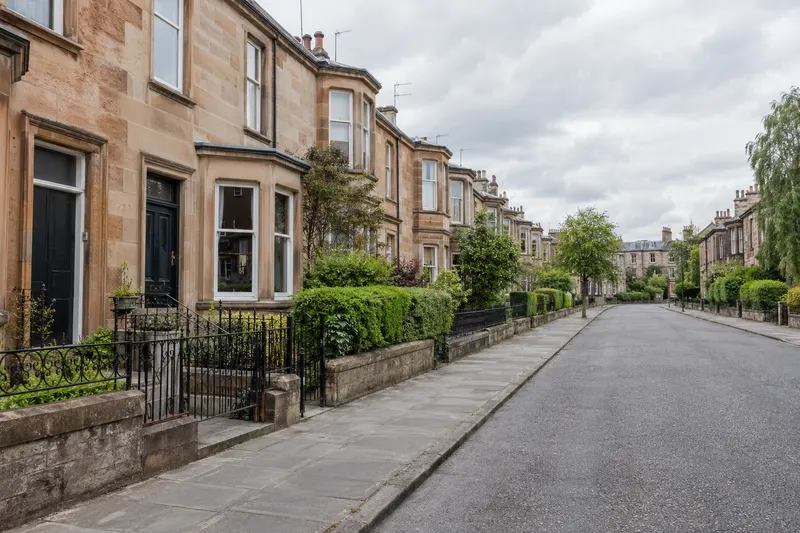
An exemption needs an official basis
The national pavement parking prohibition and a local exemption are different things. Transport Scotland explains that councils can designate particular areas where pavement parking is allowed, with the necessary signs and markings. A resident cannot create that exemption by deciding there appears to be enough room for pedestrians.
Glasgow homeowners should check the exact location rather than assuming that an entire neighbourhood has one parking status. A nearby street, the opposite side of a road or a different part of the same frontage may not tell you what applies outside your home. Read the current official information and the signs at the location together.
If information seems unclear or inconsistent, ask the council to clarify the location and current position. Describe the address and relevant part of the street precisely. Do not treat uncertainty as permission to park on the pavement while you wait for an answer.
Source: Transport Scotland: parking prohibitions and exemptions.
Use the assessment map as a starting point
Glasgow City Council has published a street assessment map. It can help you identify the information associated with an area and frame a specific enquiry. A status on an assessment map should not be read as a blanket permission for every space in that street or as a substitute for a formal exemption and its on-street signs.
Check the legend and what a status actually means before relying on a colour. A street awaiting assessment is a different proposition from an area where an exemption has formally been made. If a map or document is dated, consider whether it describes a stage in the process rather than the current position.
Keep the location specific when checking. A Glasgow postal address or a postcode beginning with G does not necessarily identify the council responsible for the road. Use the authority responsible for that address, particularly if you live near a council boundary.
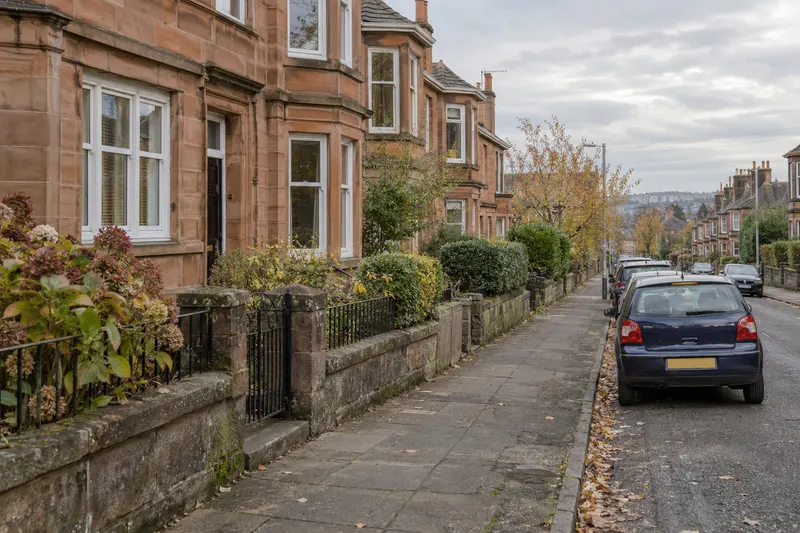
A narrow road does not let you decide the exemption yourself
It is understandable to worry about leaving enough room for traffic, emergency vehicles or a delivery. However, deciding that the carriageway feels narrow does not give an individual driver permission to move onto the pavement. The council must assess any local exemption under the applicable process.
Look for a lawful parking arrangement that also avoids obstruction. That may mean a different space rather than the closest position to the front door. Do not assume that leaving a particular gap on the pavement overrides the national prohibition; pedestrian clearance and an official exemption are separate questions.
Likewise, the fact that other cars are parked partly on the pavement does not establish that their position is permitted. A longstanding local habit is not evidence of a formal decision. Check the rule rather than following the most common arrangement you see when arriving home.
Temporary exceptions have conditions
Transport Scotland also describes conditional exceptions for certain activities and circumstances. These are distinct from a council designating an exempt area. They are not a general allowance to leave a household vehicle on the pavement because parking is inconvenient.
If you believe a particular activity falls within an exception, consult the official wording and its conditions. Avoid reducing a complicated exception to a short rule remembered from a neighbour or social-media post. Routine parking outside your home should not depend on an assumption that a temporary exception covers it.
For an existing penalty notice, follow the official instructions and deadlines shown on the notice. Keep relevant evidence if you are seeking clarification or making a challenge through the council process. A driveway enquiry cannot determine the outcome of a parking challenge.
Source: Transport Scotland: parking prohibitions and exemptions.
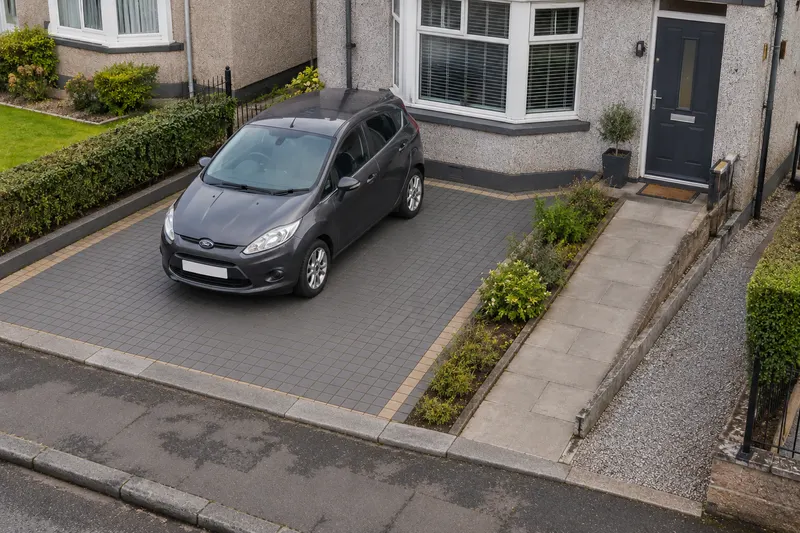
Check whether your existing driveway can work better
If the street position makes your usual parking arrangement unsuitable, assess the private space you already have. A damaged area, awkward gate movement or stored items may prevent you using a bay properly. Identify the actual cause before assuming the whole front garden needs to become parking.
Measure the full vehicles, including overhang, and allow room to open doors and walk to the entrance. A second car should fit in a way that makes daily use practical, not merely fit on a drawing when everything is closed. Keep the complete parking arrangement within the property and leave the public walking route clear.
Where there is useful land beside the current drive, a modest extension may be worth discussing. The entrance, drainage, levels and existing construction still need assessment. If the access over the footway would change, that brings a separate roads-authority question.
Discuss driveway extensions in Glasgow for more usable private parkingPlan a driveway extension for a second car
Separate the street check from the building decision
Use two short lists: what you need to establish about parking on the street, and what you need from a possible property improvement. The council deals with the first. A driveway assessment helps with the second, including whether the proposal is practical and what work would be involved.
Bring your postcode, current surface, approximate space and the daily parking problem to an initial call. Explain whether you are considering a repair, widening or a new parking area. There is no need to choose a surface before checking whether a layout can solve the problem.
An off-street parking project is a choice to evaluate against your needs and budget. It is not required by the parking prohibition, does not cancel an existing notice and cannot make an unsuitable entrance approvable. Make the decision with a clear scope rather than a promise of guaranteed savings from avoided fines.
Check Glasgow dropped-kerb permissions before changing the entrance